The Cape Whale Coast
The Southern Right Whale
Every winter they travel thousands of kilometres from the Antarctic to calve in the bays on our doorstep and give this coast its name.
We work on the Cape Whale Coast and the name isn’t marketing. Every winter, hundreds of southern right whales travel thousands of kilometres from the Antarctic to calve and mate in the sheltered bays on our doorstep. Their return shapes the season here: the towns fill, the cliff paths busy up, and the bay fills with animals the size of buses, often close enough to watch without binoculars.
It’s a genuine privilege to practise somewhere like this, so here’s a little about the whales that give this coast its name.
Why they come here
Southern right whales spend the summer months feeding in the cold, nutrient-rich waters of the Southern Ocean, building up the energy reserves they need for the year. As winter approaches they migrate north to the warmer, sheltered bays of the southern African coast, not to feed, but to mate and to calve. Walker Bay and the bays along this coast are calm and shallow, which makes them among the finest whale nurseries in the world.
They are baleen whales and filter feeders, taking krill and copepods by skimming steadily through swarms of prey with an open mouth. Mostly black, many carry a white blaze on the belly, and each animal is identifiable by the unique pattern of rough patches of skin called callosities, on its head, which is how researchers tell individuals apart year after year.
The name, and a difficult history
They were called “right” whales because whalers considered them the right whale to hunt: slow-moving, close to shore, rich in oil and baleen, and inclined to float when killed. That combination was catastrophic. Whalers worked these waters from as early as the 1770s, and by the time commercial whaling of the species was stopped in 1935, studies suggest the South African population had been reduced to as few as a few dozen breeding females.
Under protection, the population has recovered steadily, growing at roughly 6–7% a year over the decades. It’s one of conservation’s better stories, though not a finished one: researchers have recorded worrying recent changes, including longer intervals between calves and poorer body condition, thought to be linked to shifting conditions in the Southern Ocean feeding grounds.
Watching them
Hermanus is widely regarded as one of the best places on earth for land-based whale watching. The cliffs of Walker Bay put you level with animals that are often only tens of metres offshore, no boat required. The 12 km cliff path runs from the New Harbour to Grotto Beach, with viewpoints like Gearing’s Point and Siever’s Point along the way, and the town still has a Whale Crier who sounds a kelp horn when whales are spotted.
Look out for breaching (launching clear of the water), lobtailing (slapping the tail on the surface), spyhopping (raising the head to look around) and sailing (holding the tail up in the air). Licensed boat operators run from the New Harbour and are required to keep their distance, though the whales themselves often close it.
Learn more
If you’d like to go deeper, these are three credible places to start:
Facts on this page are drawn from publicly available sources including the MRI Whale Unit and Hermanus Tourism. Figures are indicative and change as research progresses.
Speak to Tracy
Every matter is handled personally by a senior conveyancer — not passed down a queue.
Helpful downloads
Three offices
Hermanus · Betty’s Bay · Pringle Bay
Mon–Fri, 08:00–16:00
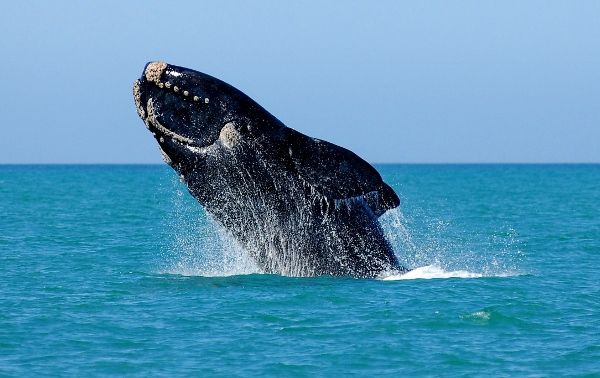
Image source: https://www.raggycharters.co.za/listing/southern-right-whale-eubalaena-australis
Explore more
Ready to talk it through?
Tell us about your matter and we’ll come back to you personally, usually the same working day.